When an A/C Compressor Fails From the Inside: 2015 Toyota Sienna A/C Repair
A grinding noise and unstable engine speed led us to a locked compressor—and metal contamination throughout a front-and-rear air-conditioning system.
When a vehicle’s air conditioning stops blowing cold, it can be tempting to assume it simply needs refrigerant. However, unusual noises or changes in the way the engine runs when the A/C is switched on can indicate a much more serious mechanical problem.
A 2015 Toyota Sienna XLE recently came to PROFIX Auto Repair with an especially concerning set of symptoms. The A/C had not been cooling as well as it should, and whenever it was turned on, the engine speed would surge and drop while a grinding noise came from under the hood.
This was not a situation where adding refrigerant was going to solve the problem.
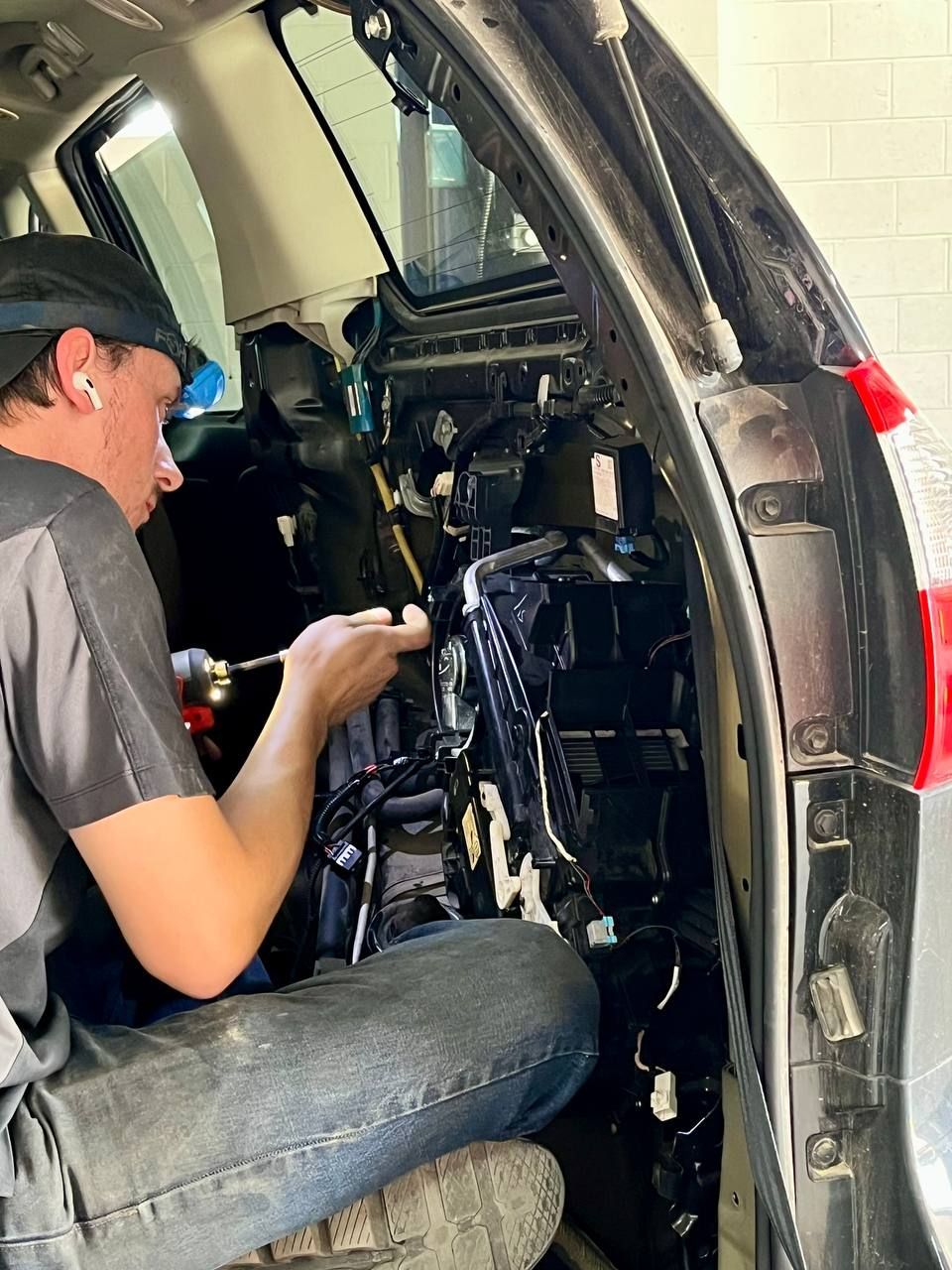
Reaching the rear A/C components in this Toyota Sienna required extensive interior disassembly.
Diagnosing the Grinding Noise
We began by confirming the customer’s concern and observing what happened when the air conditioning was activated.
When the A/C compressor attempted to engage, the compressor clutch would slip and the engine would struggle under the added load. The compressor could not be rotated by hand, confirming that it had locked up internally.
That explained both major symptoms. The grinding was coming from the compressor area, while the engine speed changed because the engine was attempting to turn a compressor that was no longer able to rotate normally.
At this point, we knew the compressor had failed. The next question was whether the damage was limited to the compressor—or whether the failure had affected the rest of the system.
Finding Metal Inside the A/C System
After recovering the refrigerant and disconnecting the lines at the compressor, we found metal debris inside the air-conditioning system.
That discovery completely changed the scope of the repair.
An A/C compressor contains moving internal parts and circulates refrigerant and oil throughout the system. When a compressor fails mechanically from the inside, small metal particles can be carried into the refrigerant lines, condenser and expansion valves.
Installing a new compressor without addressing that contamination would leave damaging debris inside the system. The replacement compressor would then be exposed to the same metal that came from the original failure.
In other words, replacing only the visibly failed component would not have been a complete repair.
Why This Sienna Was More Complicated
This Toyota Sienna is equipped with both front and rear air conditioning. That is an important distinction because the refrigerant must travel through a larger system with additional lines and components.
The vehicle uses expansion valves to control refrigerant flow through both the front and rear portions of the A/C system. Because metal had circulated through and contaminated the entire system, both expansion valves had to be replaced along with the compressor, condenser and affected refrigerant lines.
The front portion of the system could be accessed in a fairly familiar location. Reaching the rear expansion valve was a different story.
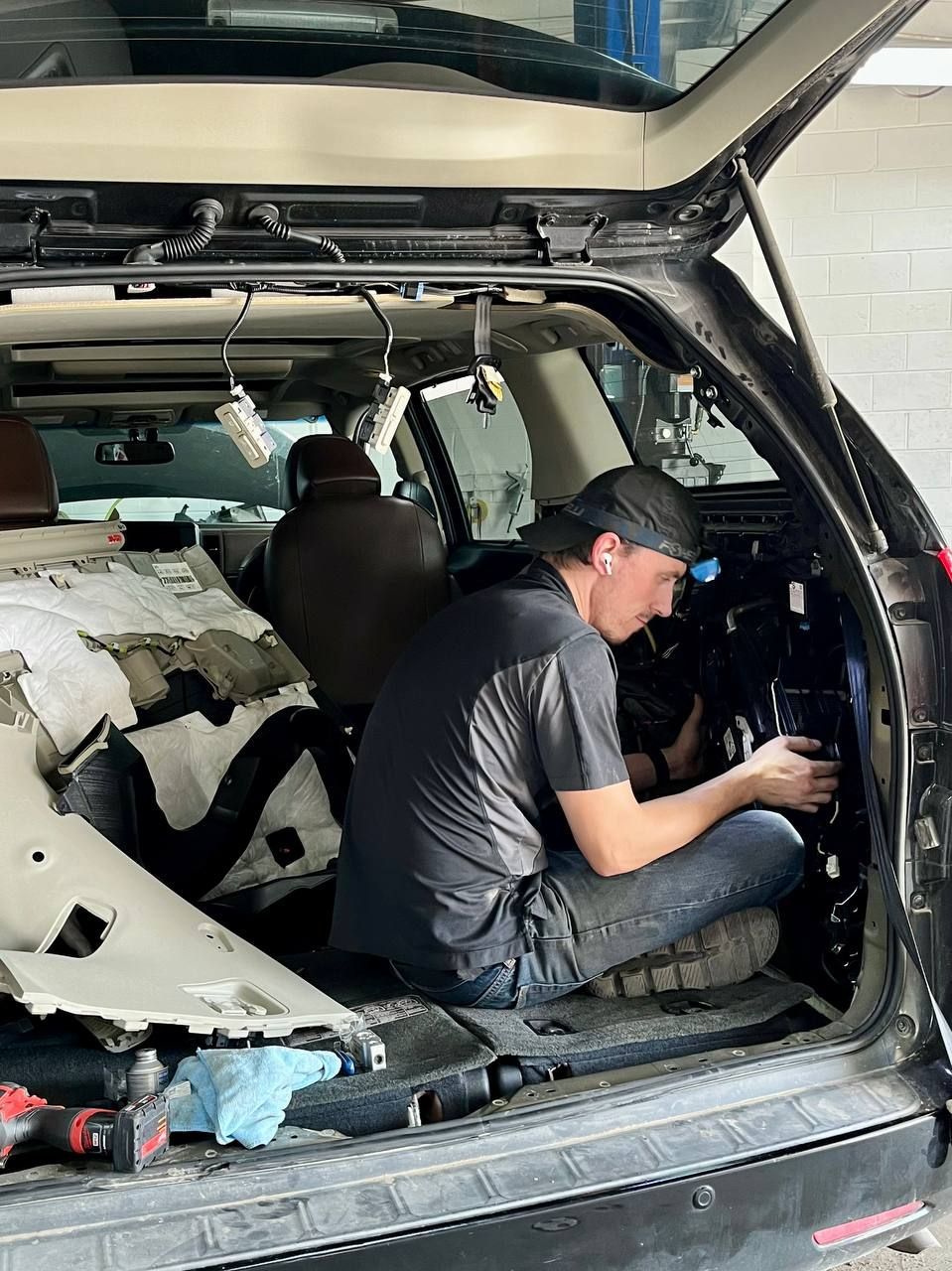
Much of the passenger-side rear interior is carefully removed to reach the rear HVAC components.
Accessing the Rear A/C Components
The photographs tell this part of the story better than a simple list of labor operations ever could.
To access the rear A/C system, several interior trim panels and components had to be carefully removed from the passenger side of the van. This exposed the rear HVAC case and allowed our technician to reach the rear expansion valve.
Every panel, electrical connector, fastener and interior component had to be removed without causing damage and then correctly reinstalled after the A/C work was completed.
This is why two repairs that sound similar on paper can involve very different amounts of work. Replacing an expansion valve near the front of a vehicle is not the same as replacing one buried behind the rear interior of a minivan.
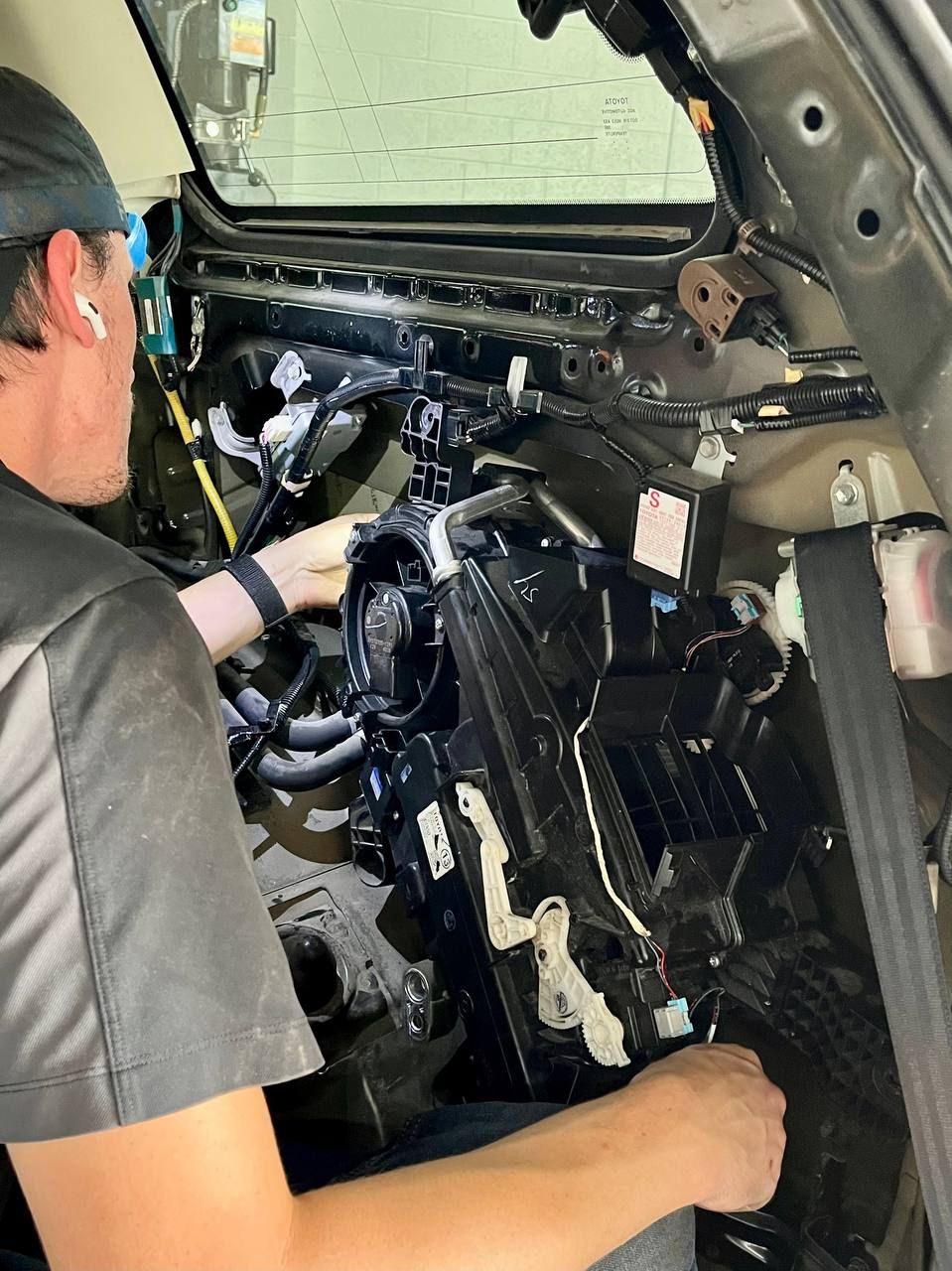
With the interior removed, the rear HVAC housing and refrigerant connections could finally be accessed.
Completing the A/C Repair Properly
The complete repair included replacing the locked A/C compressor, the condenser assembly, and the front and rear expansion valves. The serviceable refrigerant lines were flushed to remove remaining contamination before the system was reassembled.
Once everything was back together, the system had to be evacuated. Evacuation removes air and moisture and also allows the system to be checked before the correct amount of refrigerant is installed.
This was considerably more involved than simply removing one compressor and installing another, but the additional work was necessary because of what we found inside the system.
The goal was not merely to make the A/C blow cold temporarily. It was to remove the source of the failure, address the contamination it created and give the replacement components a clean system in which to operate.
What Drivers Should Know About A/C Compressor Failure
A failing compressor does not always begin with a complete loss of air conditioning. Early warning signs may include:
- Cooling that gradually becomes less effective
- Grinding, rattling or scraping when the A/C is activated
- Engine speed dropping or fluctuating when the compressor engages
- A belt squeal or unusual noise from under the hood
- The engine feeling as though it may stall when the A/C is turned on
Continuing to operate an A/C system that is making mechanical noises can allow a deteriorating compressor to create additional damage. Once metal enters the system, what might have begun as one failed component can become a much more extensive repair.
Of course, not every warm-air complaint means the compressor has failed. Low refrigerant, electrical problems, cooling-fan issues, restrictions and faulty controls can all cause poor A/C performance. That is why proper testing comes before recommending parts.
Toyota Sienna A/C Repair in Norman, Oklahoma
This 2015 Toyota Sienna is a good example of why the first failed part is not always the entire story.
The locked compressor explained the grinding noise and unstable engine speed, but opening the system revealed the more important issue: metal contamination had traveled beyond the compressor itself. Because the Sienna has front and rear air conditioning, completing the repair also meant accessing components hidden behind the rear interior.
At PROFIX Auto Repair and Leon’s PROFIX Auto Repair in Norman, we diagnose the complete system before deciding what a vehicle actually needs. Whether the problem is a simple refrigerant leak, an electrical fault or an internally damaged compressor, our goal is to explain what we found and perform a repair designed to last.
If your vehicle’s A/C is blowing warm, making unusual noises or affecting the way the engine runs, schedule an air-conditioning diagnostic at either of our two convenient Norman locations.
Contact us or book your repair online below:
PROFIX Auto Repair – West
1121 Rambling Oaks Dr
Norman, OK 73072
📞 (405) 310-2279
🕒 Monday–Friday: 7:30 AM – 5:00 PM
Leon’s PROFIX Auto Repair – East
521 N Porter Ave
Norman, OK 73071
📞 (405) 364-2799
🕒 Monday–Friday: 7:30 AM – 5:00 PM
Email Us: