2007 GMC C5500 TopKick Shuttle Bus A/C Diagnosis in Norman, OK
When the air conditioning stops working properly in a passenger car, the system is usually fairly straightforward. On a commercial shuttle bus, things can get considerably more complicated.
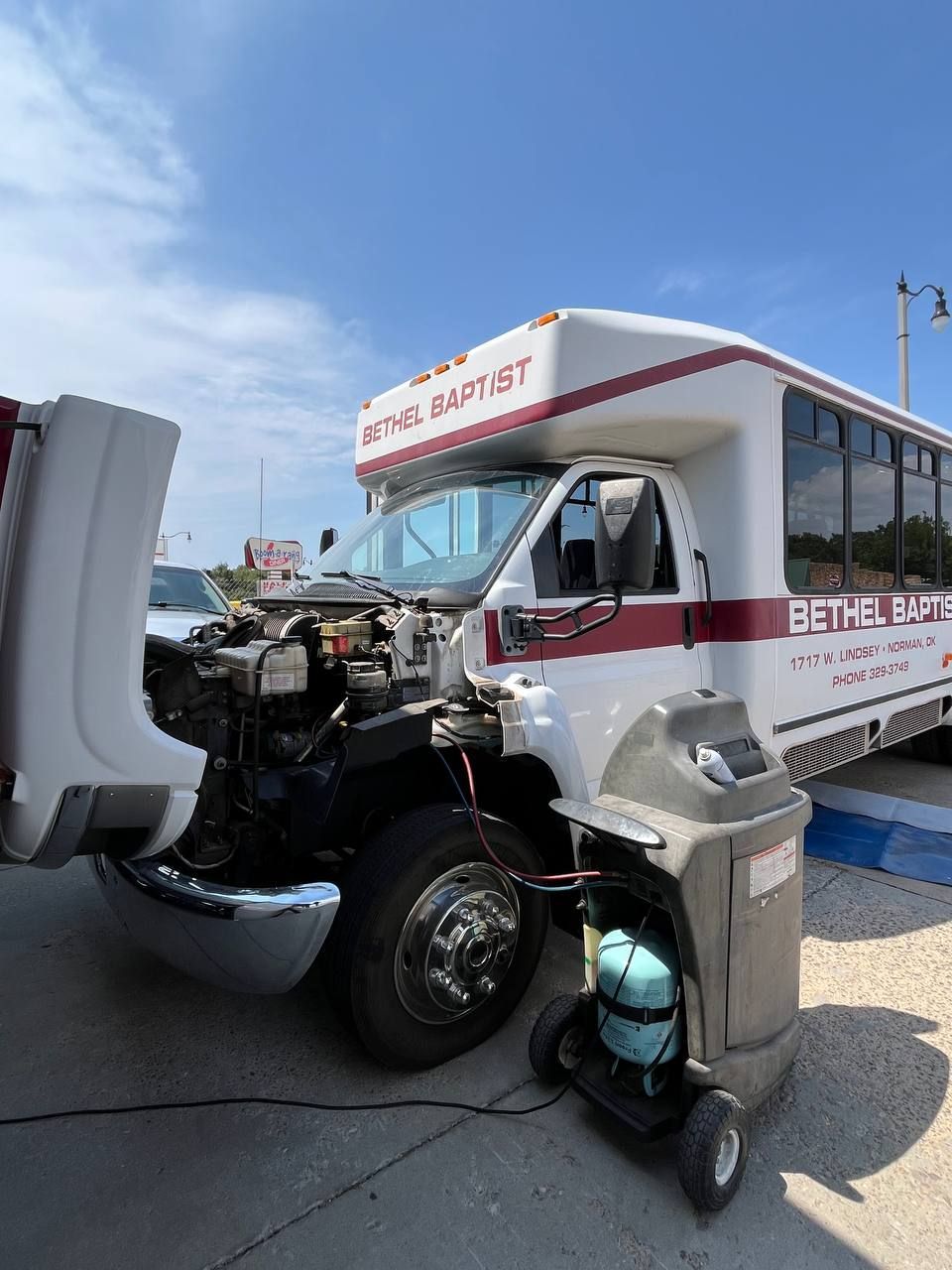
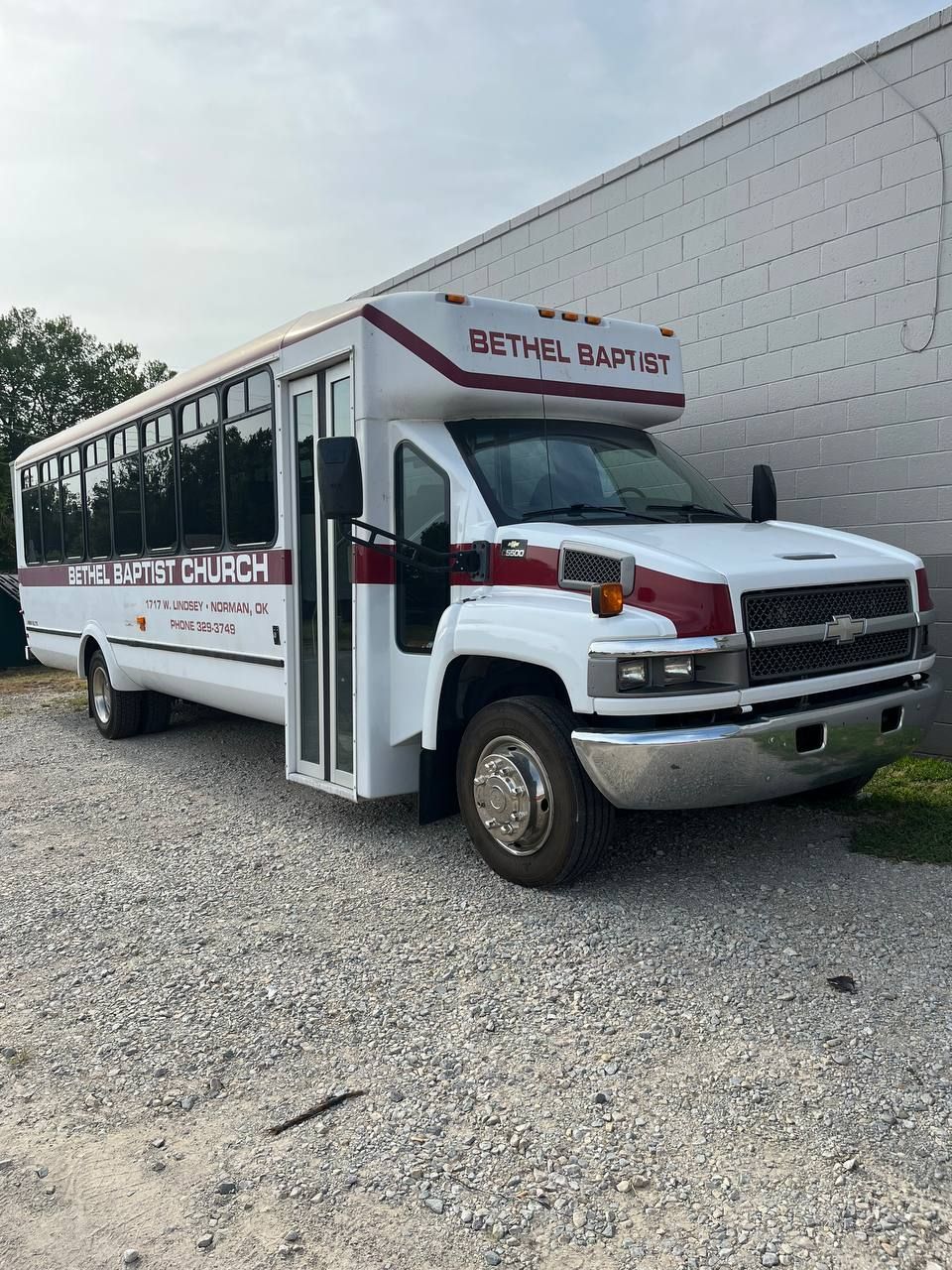
We recently had Bethel Baptist Church’s 2007 GMC C5500 TopKick shuttle bus in our Norman shop with an unusual A/C complaint: the front A/C was blowing cold, but the rear system was moving air without getting cold.
Because this bus carries a much larger passenger compartment than a typical vehicle, its air-conditioning system uses additional equipment throughout the body of the bus. Diagnosing it means looking beyond the components normally found under the hood.
Shuttle Bus A/C Is Very Different From Passenger-Car A/C
The GMC C5500 provides the chassis and drivetrain, but a shuttle-bus body requires considerably more cooling capacity than the original cab alone.
This particular bus has auxiliary A/C equipment serving different areas of the passenger compartment, along with multiple condenser fans and additional electrical controls.
That means the front vents can be producing cold air while another portion of the system is not operating correctly.
For fleet operators, churches, shuttle services and other organizations using commercial passenger vehicles, that distinction matters. A partially working A/C system does not necessarily mean the entire system is healthy.
A Much Larger A/C System
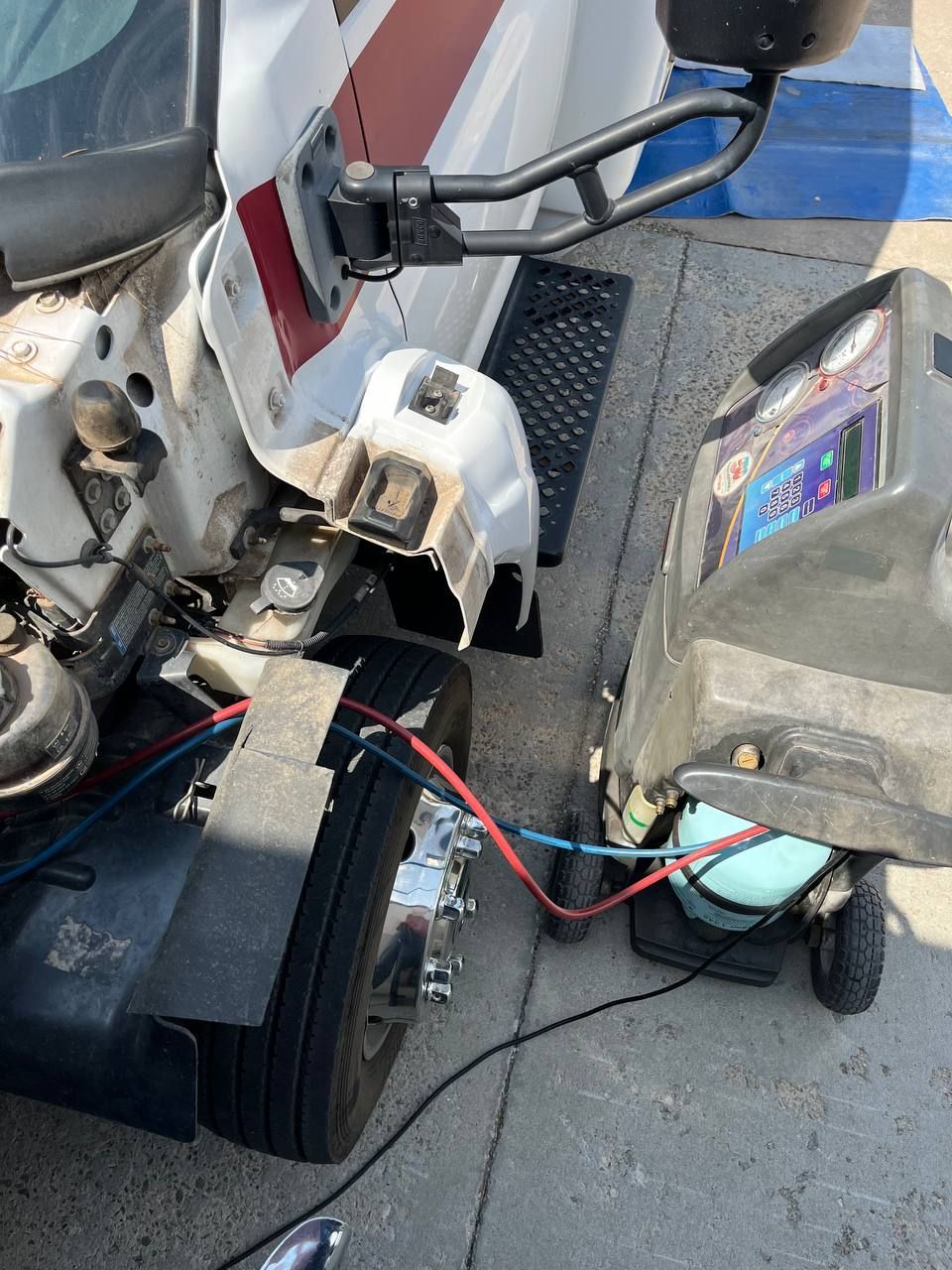
One of the first indications of just how different this vehicle is came during the A/C service itself.
The system specification called for approximately 7.5 pounds of refrigerant. By comparison, a normal passenger vehicle typically uses a fraction of that amount.
During service, only about 0.66 pound was recovered from the system.
After evacuating and recharging the system to the correct specification, however, another problem quickly became apparent.
The high-side pressure climbed above 350 PSI within roughly 45 seconds of startup.
That is not something we want to ignore.
Excessively high pressure can indicate that the system is having difficulty releasing heat. Possible causes can include restricted airflow across a condenser, condenser fan problems, restrictions within the refrigerant circuit or other faults.
Instead of simply assuming the bus needed refrigerant, the next step was to determine why the pressure was climbing so rapidly.
Why Does This Bus Have So Many Condensers and Fans?
This is one of the most interesting parts of the vehicle.
A condenser's job is to remove heat from the refrigerant after that heat has been absorbed from inside the vehicle. On a normal car or SUV, the primary condenser is generally mounted at the front of the vehicle where airflow can pass through it.
A shuttle bus has an enormous interior volume by comparison.
Keeping dozens of feet of passenger compartment cool in an Oklahoma summer requires far more heat-rejection capacity, so the auxiliary A/C system uses additional condenser sections and electric fans.
Those components can be seen behind the vented panels along the lower side of this bus.
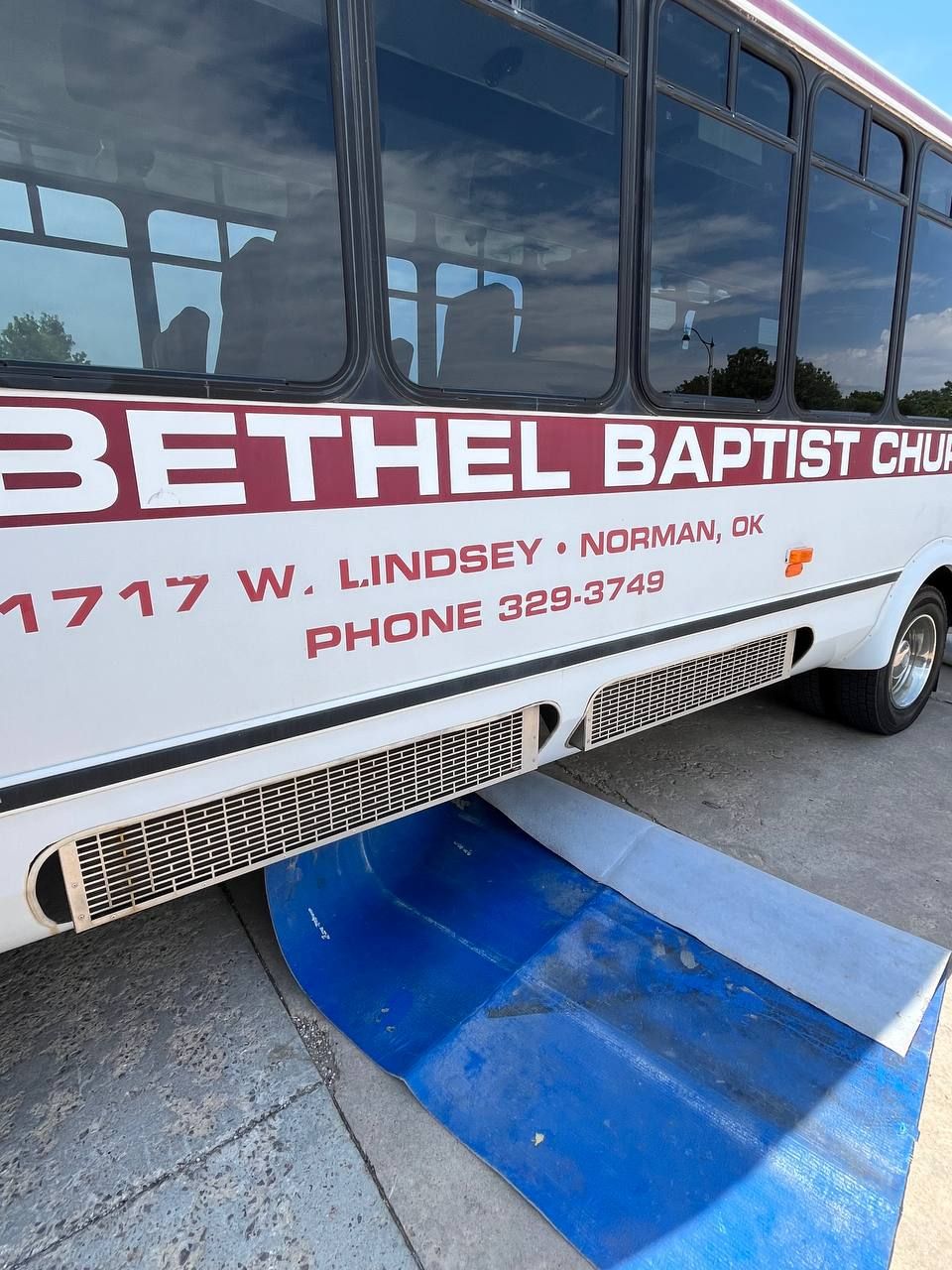
If those condenser fans stop operating, airflow through the condenser can be reduced dramatically.
The refrigerant may still be circulating, and part of the vehicle may even continue producing cold air, but the system can no longer reject heat the way it was designed to.
That can send high-side pressure upward very quickly.
Front A/C Cold, Rear A/C Warm
The original complaint on this bus was particularly useful diagnostically.
The front A/C was cooling, while the rear blower was operating but the air was not getting cold.
This tells us something important: airflow and refrigeration are two different things.
A blower fan can work perfectly well while the refrigerant side of that section of the system is not doing its job.
This bus has additional HVAC equipment mounted above the cab area.
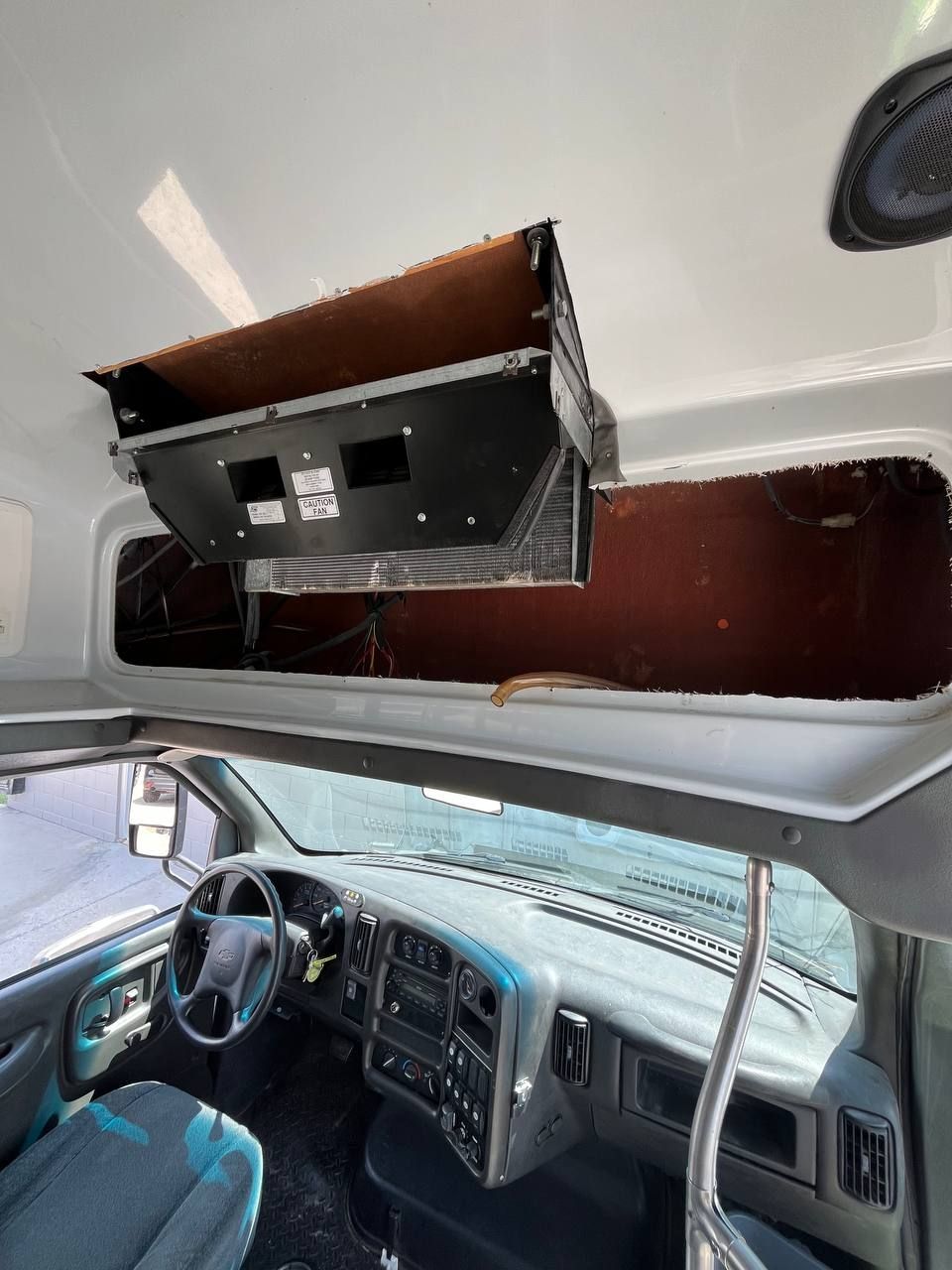
This is why diagnosing a complaint such as “the front A/C works but the rear A/C doesn't” requires more than simply checking whether the compressor turns on.
Several different pieces of the system have to work together.
Finding a Condenser Fan Problem
While inspecting the condenser assemblies during testing, we found that the rearmost condenser fans were not operating.
That immediately provided a possible explanation for the rapidly increasing high-side pressure.
Without proper airflow across those condensers, the system cannot efficiently shed the heat being carried by the refrigerant.
At that point, the diagnosis moves from the refrigeration side of the system into the electrical side.
The question becomes:
Why aren't the fans running?
The fan motors themselves could be faulty, but the problem can also involve relays, fuses, wiring, power supply, grounds or the controls responsible for commanding the fans on.
This shuttle bus has a dedicated electrical distribution setup containing multiple relays and high-amperage fuses for its auxiliary equipment.
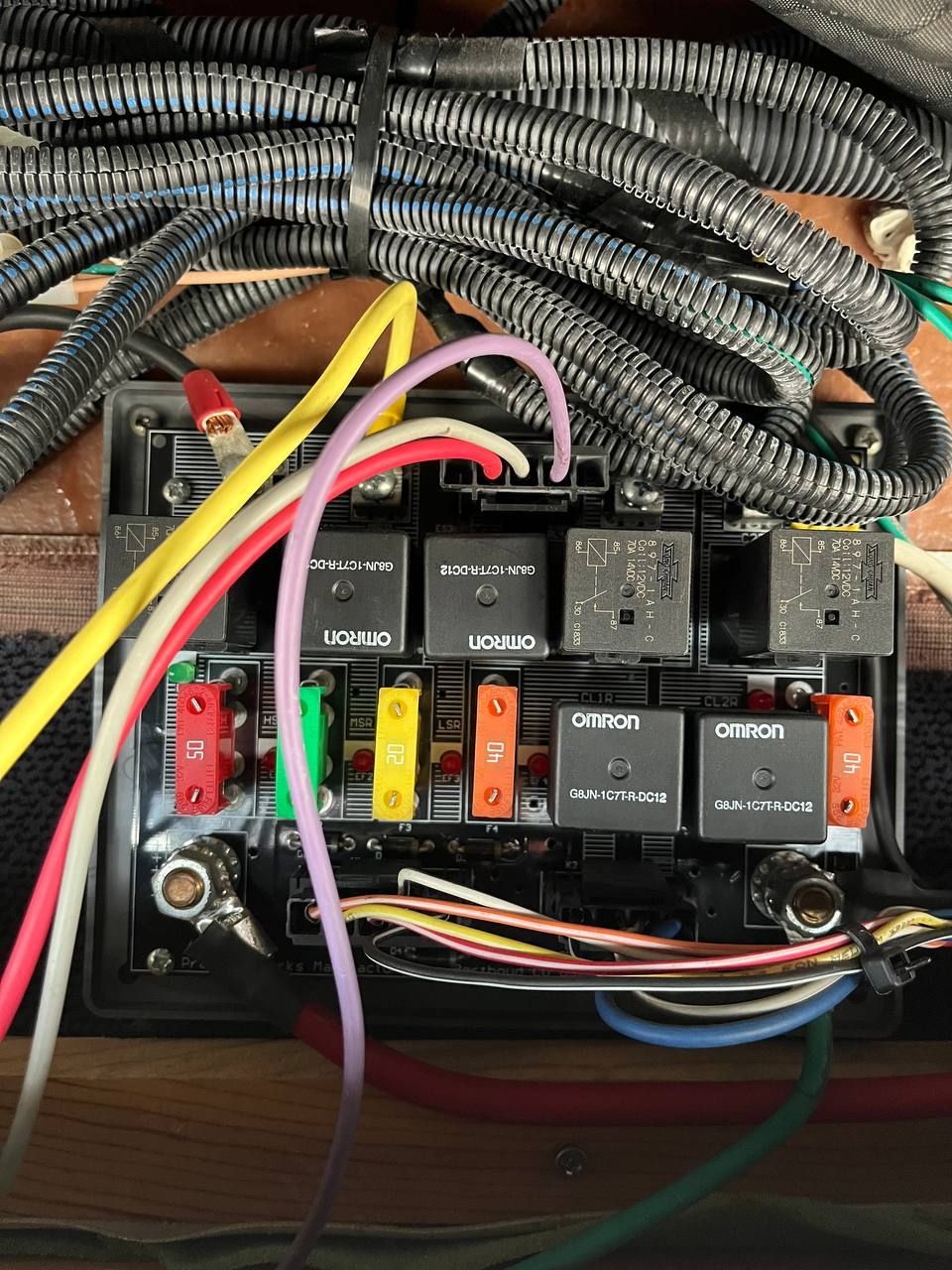
This is where proper diagnosis matters.
Replacing parts based solely on a symptom can become very expensive on a vehicle with this many individual A/C components. The better approach is to determine exactly where the electrical circuit is failing before recommending the repair.
Why Fleet A/C Problems Require a Different Approach
Fleet and commercial vehicles frequently contain equipment that simply does not exist on ordinary passenger cars.
Depending on the vehicle, we may encounter:
- Additional evaporators and blower assemblies
- Multiple condensers and electric condenser fans
- Long refrigerant lines running through the vehicle
- Separate relay and fuse panels
- Body-builder or aftermarket electrical systems
- Multiple passenger cooling zones
- Much larger refrigerant capacities
That is why a commercial A/C complaint can require both air-conditioning diagnostics and electrical diagnostics before the actual cause is identified.
A system like this also demonstrates why simply adding refrigerant is not an adequate diagnosis.
If a condenser fan isn't operating, adding refrigerant isn't going to repair the fan circuit — and continuing to run a system with excessive pressure can create additional problems.
Commercial and Fleet Vehicle Repair in Norman, OK
This GMC C5500 is a good example of the type of unusual vehicle that comes through our shop.
In addition to regular cars, trucks and SUVs, PROFIX Auto Repair works with fleet and commercial vehicles, including shuttle buses and other specialty vehicles that may require more involved diagnostic work.
For organizations operating passenger vehicles, keeping those vehicles available is important. A failed A/C system in an Oklahoma summer can take a shuttle or transport vehicle out of service even when the vehicle runs perfectly well otherwise.
Whether the problem involves the A/C system, electrical controls, brakes, steering, suspension, engine performance or routine fleet maintenance, our goal is to diagnose the actual problem and help keep the vehicle on the road.
Need Shuttle Bus or Fleet Vehicle Repair in Norman?
If your church, business or organization operates a shuttle bus, commercial vehicle or fleet in Norman, Oklahoma, PROFIX can help with diagnostics, repair and maintenance.
From unusual A/C systems like this GMC C5500 TopKick to more conventional fleet trucks and vans, our team is equipped to work through problems that require more than basic parts replacement.
Contact PROFIX Auto Repair to schedule fleet or commercial vehicle service in Norman, OK.
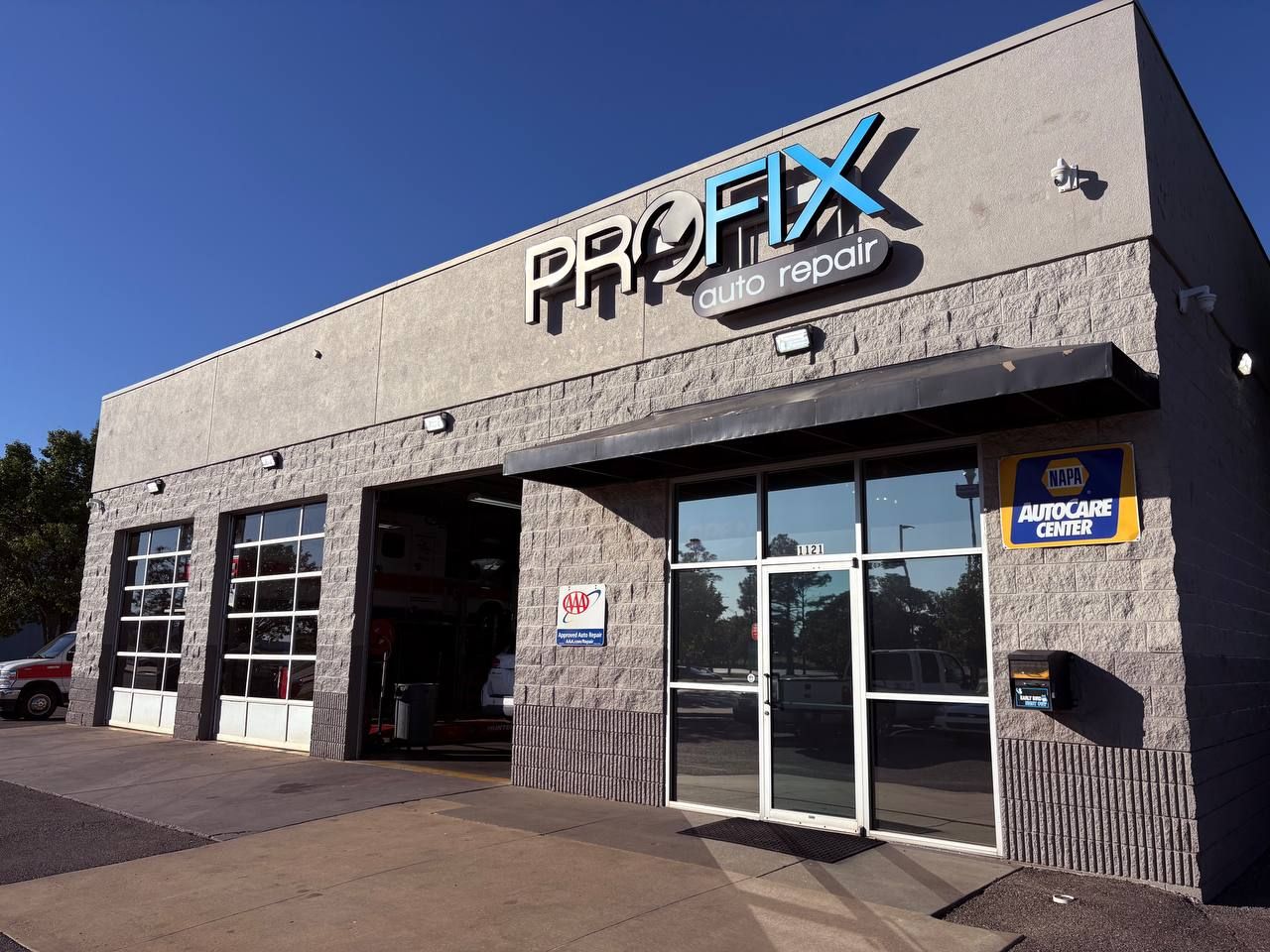
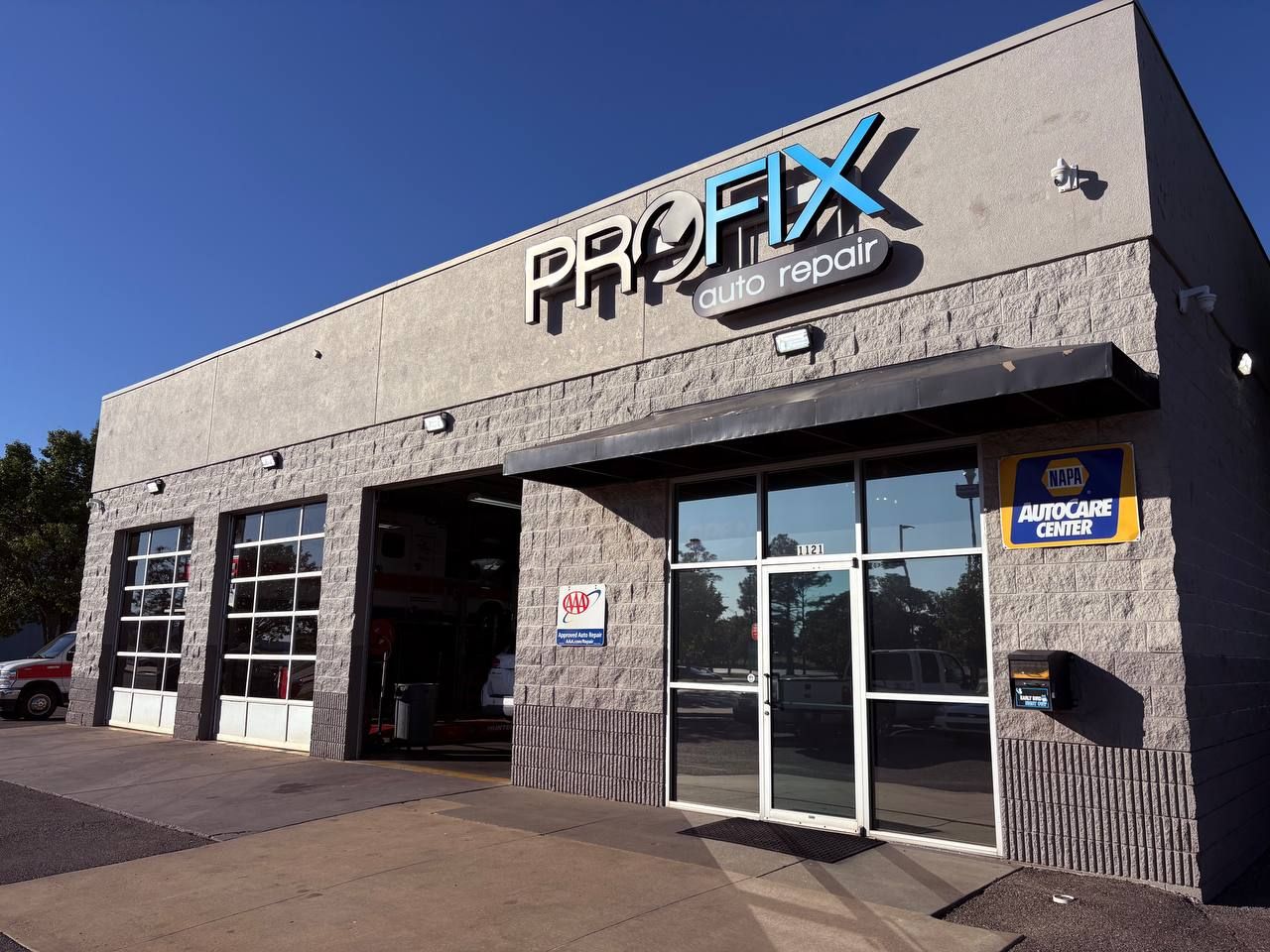
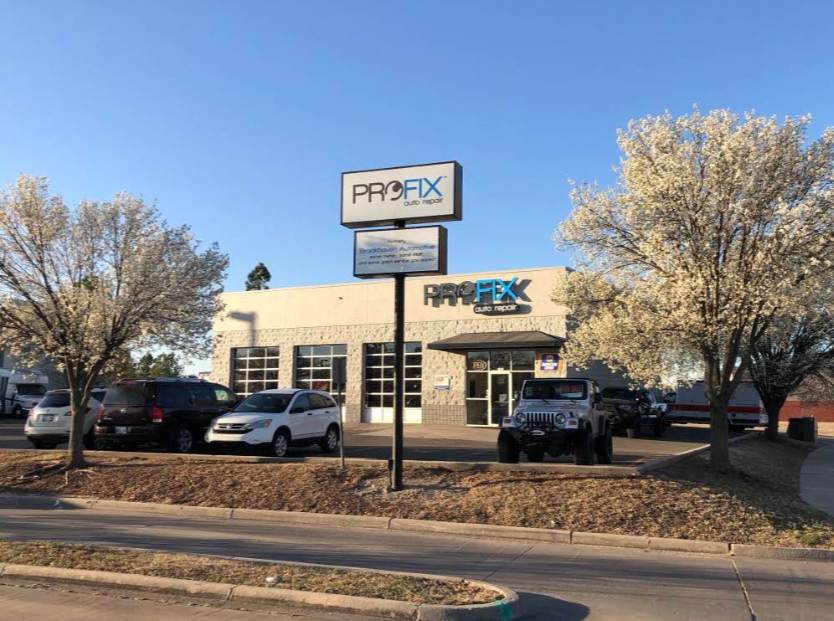
PROFIX Auto Repair – West
1121 Rambling Oaks Dr
Norman, OK 73072
📞 (405) 310-2279
🕒 Monday–Friday: 7:30 AM – 5:00 PM
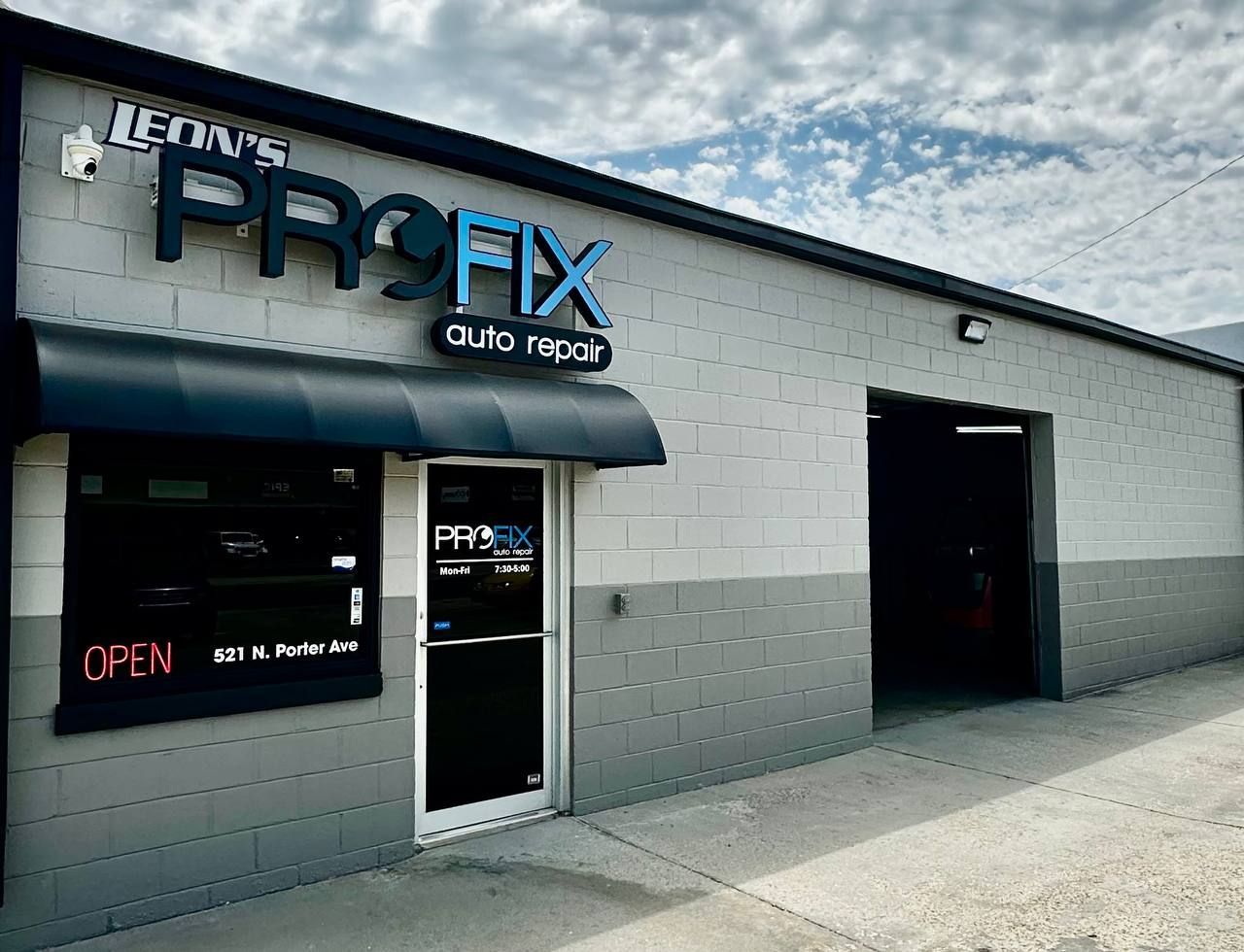
Leon’s PROFIX Auto Repair – East
521 N Porter Ave
Norman, OK 73071
📞 (405) 364-2799
🕒 Monday–Friday: 7:30 AM – 5:00 PM
Email Us: